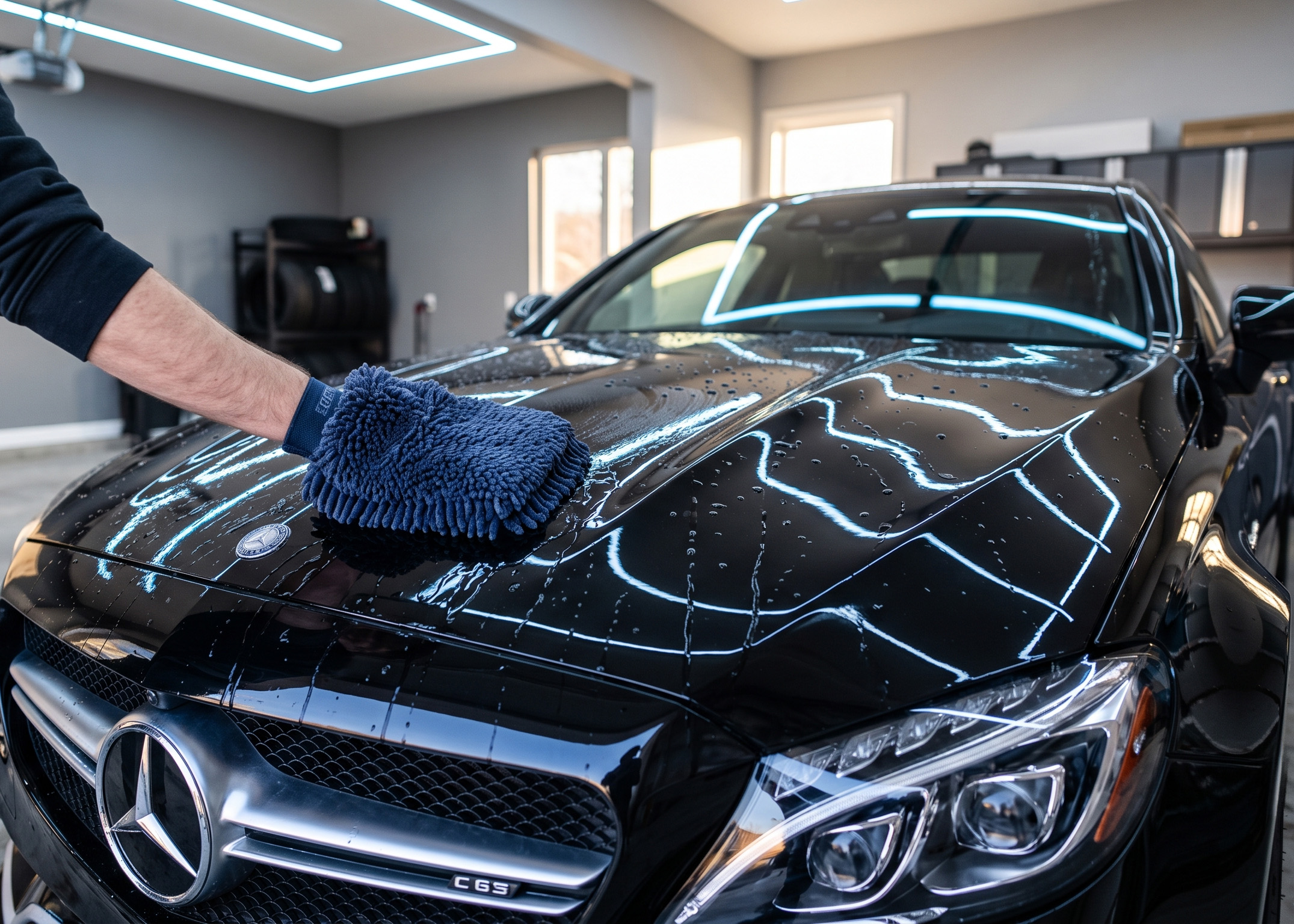
The First Few Days Matter More Than You'd Think Right after installation, the adhesive underneath the film hasn't fully cured yet. Most installers recommend waiting somewhere between 3 and 5 days before the first wash — some say a minimum of 72 hours. During that window, avoid touching the film aggressively, and definitely skip the car wash. You might notice small bubbles, faint water spotting under the film, or a slightly hazy look right after install — that's usually trapped moisture or micro-dust working its way out during curing, and it typically clears up on its own within the first several days. If it hasn't cleared after a week or two, that's worth a call back to your installer, not something to try to fix yourself. The Wash Method That Actually Works Hand-washing is the standard recommendation, and for good reason. A pH-neutral car shampoo, a soft microfiber wash mitt, and the two-bucket method — one bucket for soapy water, one for rinsing your mitt before reloading it with soap — keeps grit from getting dragged across the surface repeatedly. It sounds like a small detail, but most of the fine scratching people blame on "bad film" actually comes from washing technique, not the film itself. Drying matters just as much as washing. A large, clean microfiber drying towel or a dedicated car dryer reduces water spotting, especially on darker vehicles where mineral deposits from air-drying show up more obviously. What to Avoid Entirely Automatic car washes with spinning brushes are one of the more common ways people accidentally degrade their own film. The brushes aren't cleaned between every vehicle, and they can drag contaminants across your paint that cause fine swirling over time — this is true for bare paint too, but it's worth mentioning because a lot of people assume film makes them immune to it. Touchless automatic washes are somewhat safer, but the chemical strength used in some of them can still be harsher than what you'd choose for hand-washing. Pressure washers deserve a specific warning: don't aim a pressure washer directly at film edges from close range. The edges are the most vulnerable part of any PPF install, since that's where the film terminates and the adhesive bond is most exposed to being lifted. A pressure washer used generally, at a reasonable distance and angle, is usually fine for rinsing — it's the close, direct blast at an edge or seam that causes problems. Dealing With Contaminants Before They Etch Bird droppings, bug splatter, and tree sap are all mildly acidic or otherwise chemically aggressive, and they can etch into film (or bare paint) if left to bake in the sun for days. The practical rule is simple: the sooner you get it off, the less likely it leaves a mark. A quick spray-and-wipe with a gentle detailer spray, rather than letting it sit until your next full wash, goes a long way. Products That Help, and Products That Hurt Film-safe waxes, sealants, and ceramic toppers are generally fine and often recommended — they add a slicker, more hydrophobic surface on top of the film, which makes the next wash easier and helps contaminants release before they can etch. What you want to avoid are products with strong solvents or abrasive compounding agents meant for correcting bare paint; those can degrade the film's topcoat faster than it would naturally wear on its own. Seasonal Considerations Worth Knowing Winter road salt is corrosive and should be rinsed off reasonably promptly, especially around lower panels and wheel wells where it tends to accumulate. In hot climates, the self-healing property of PPF actually works in your favor more often, since ambient heat alone is frequently enough to smooth out light scratching without any extra effort on your part. When It's Time to Call a Professional Instead of DIY-ing It If you notice a lifting edge, a bubble that hasn't gone away after the initial cure window, or debris that seems trapped under the film rather than on top of it, that's a job for whoever installed it — not a home fix. Attempting to reseat a lifted edge yourself with household adhesive or a hairdryer can make the repair more complicated than if it's addressed early by someone with the right tools. Making the Investment Last Zaelex offers a PPF and vinyl hydrophobic coating add-on specifically for this reason — a topcoat ceramic shield applied over the film that makes day-to-day maintenance noticeably easier and helps protect the investment you already made in the film itself. Every install also goes through Zaelex's Inspect, Decontaminate, Install, Certify process, which includes walking customers through exactly this kind of aftercare guidance before the car leaves the shop, not just handing over a printed sheet. If you're in the Modesto, CA area and want a hydrophobic topcoat added to existing film or a fresh install, that's a straightforward add-on to book.
How Do I Wash a Car With Paint Protection Film? A Real-World Maintenance Guide
Modesto, CA
Visit Us & Get In Touch
Stop by the studio or send us a message — we'll get back to you promptly.